TOKYO · PHOTO ESSAY · 5 MIN READ
Tokyo Before 9AM
A run, a coffee, and the city before it gets loud.
Japanwise Studio · October 2026
Tokyo is usually introduced at full volume: the crossing at Shibuya, the platforms at rush hour, the restaurants and signs that keep glowing long after dark.
But early in the morning, the city asks for less of you.
There are fewer decisions to make. Fewer places insisting that you stop. The air feels lighter, the pavements are still cool, and even familiar neighbourhoods seem to have more space around them.
This is not a route to follow exactly. It is a rhythm assembled from more than one Tokyo morning: a run through Yoyogi Park, coffee wherever feels right that day, then a walk with no urgent destination.
The coffee shop changes.
The ritual doesn’t.
Move — Yoyogi Park
At 6:30, Yoyogi Park belongs to movement.
Runners pass beneath the trees. A bicycle waits beside a bench. Someone stretches in a patch of early light. There is no queue, no ticket and no particular view you are meant to photograph. The park is simply being used.
Running here is less about distance than adjustment. Your breathing finds a rhythm; the previous day drops away; Tokyo begins to feel like a neighbourhood rather than a destination.
You do not need to be a runner to understand the appeal. Walk a loop. Sit for a while. Notice how much of the city is already awake before its shops are open.

Coffee — the place changes
Coffee comes next, but not always from the same counter.
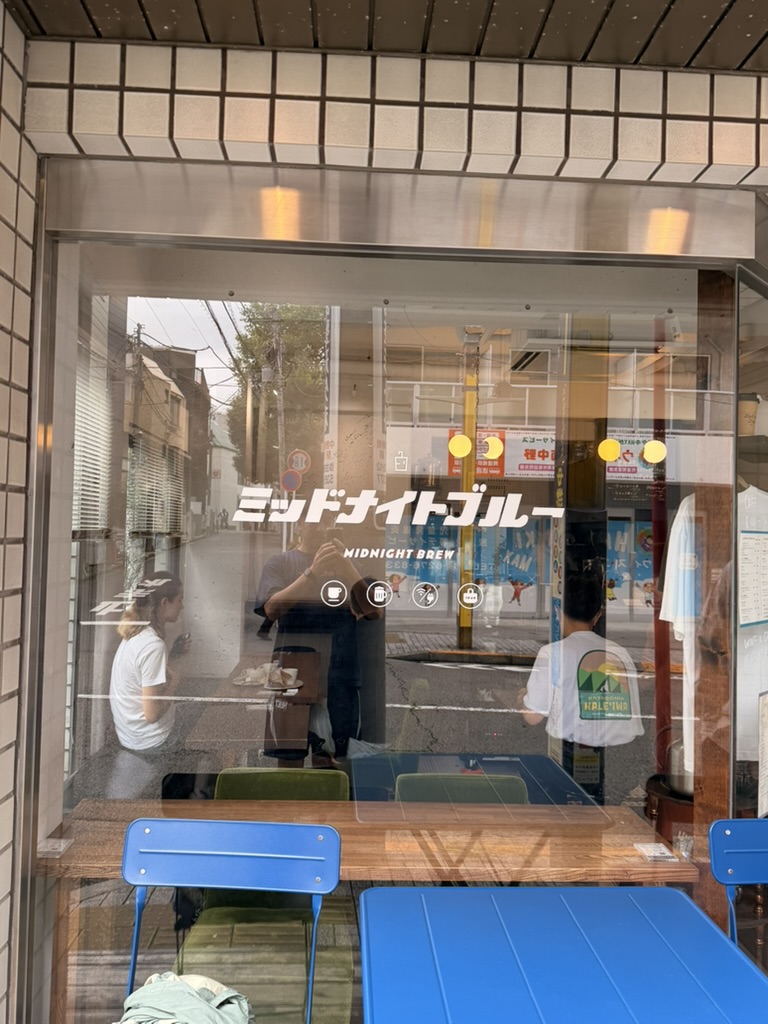
Some mornings lead to Coffee Supreme Tokyo. Others to ANDY COFFEE, MIDNIGHT BREW or Sedai Coffee in Hatagaya. Little Nap Coffee Stand waits just beyond the park and becomes part of the story when its door opens.
These are not five stops to collect, and this is not a ranking. The point is to choose one. Go where the morning takes you, order what you actually want, and let the cup mark the space between moving and wandering.
The coffee shop changes. The ritual doesn’t.


Walk without much of a plan
Then walk.
Not towards the next landmark, necessarily. Take the quieter street. Carry the drink for a little longer. Let a row of bicycles, the light between buildings or a shop preparing to open become enough reason to slow down.

On one of these mornings, there was an ice cream lying in the road, already beginning to surrender to the pavement.
It was not beautiful in the usual travel-magazine sense. It was not important. But that was precisely why it stayed in the memory: a small, unexplained interruption in an otherwise orderly street.
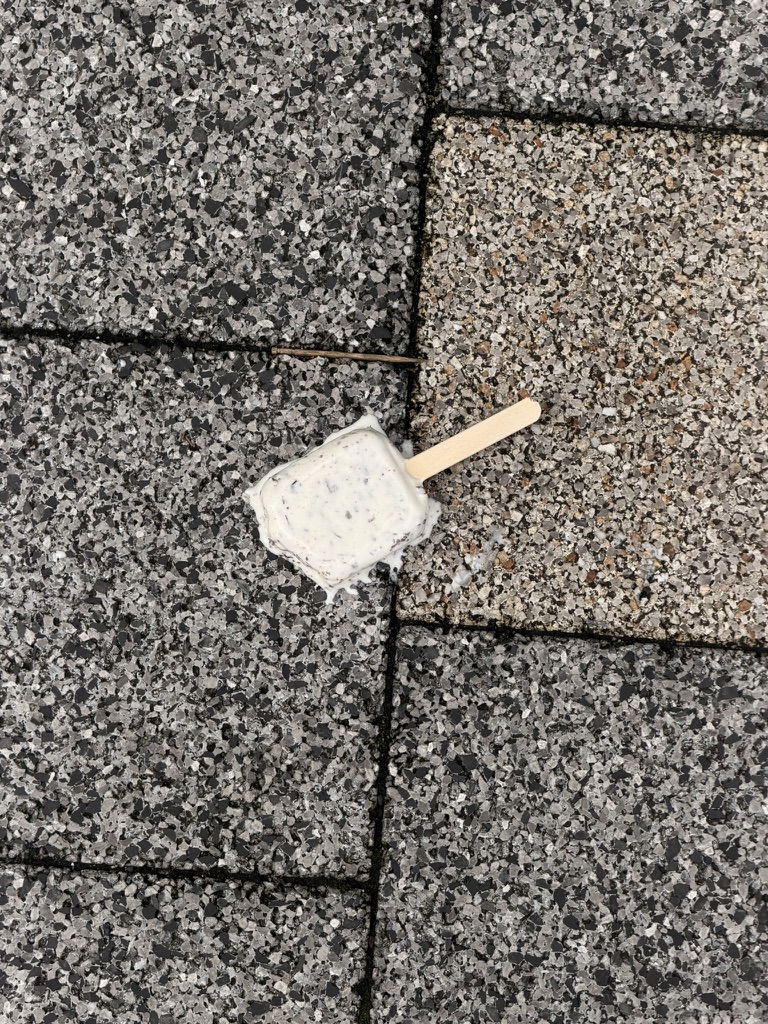
Not everything you notice needs to make it onto a travel list. A bicycle left beside a park bench. Morning light caught in the trees. An abandoned ice cream slowly melting into the road.
None of these are reasons to visit Tokyo. They are part of the reason to walk through it.
The city changes
By nine, the volume begins to rise.
More shutters are open. Coffee counters fill. Trains arrive with greater urgency and the pavements develop a direction. Little Nap is part of that gradual opening, too: another door, another first cup, another neighbourhood settling into the day.

Seen from above, Tokyo appears to wake all at once. At street level, it happens person by person. A barista lifts the shutter. An office worker reaches a desk. A builder steps onto a site. A driver begins a route. Deliveries arrive, uniforms appear, lights come on — and the quiet city becomes a city at work.
This is not the moment when the “real” Tokyo begins. The quieter city was real as well. It was simply available for a shorter time.
There is something useful in noticing the transition. Travel can encourage us to move from sight to sight, measuring a day by what we managed to fit into it. A morning like this suggests another measure: how closely we paid attention.
THE JAPANWISE TAKE
You don’t always need another place on your Tokyo itinerary.
Sometimes, you just need to see the same city at a different hour.
Wake up early. Run if you want to. Find a coffee. Walk without much of a plan.
Tokyo will take care of the rest.
